
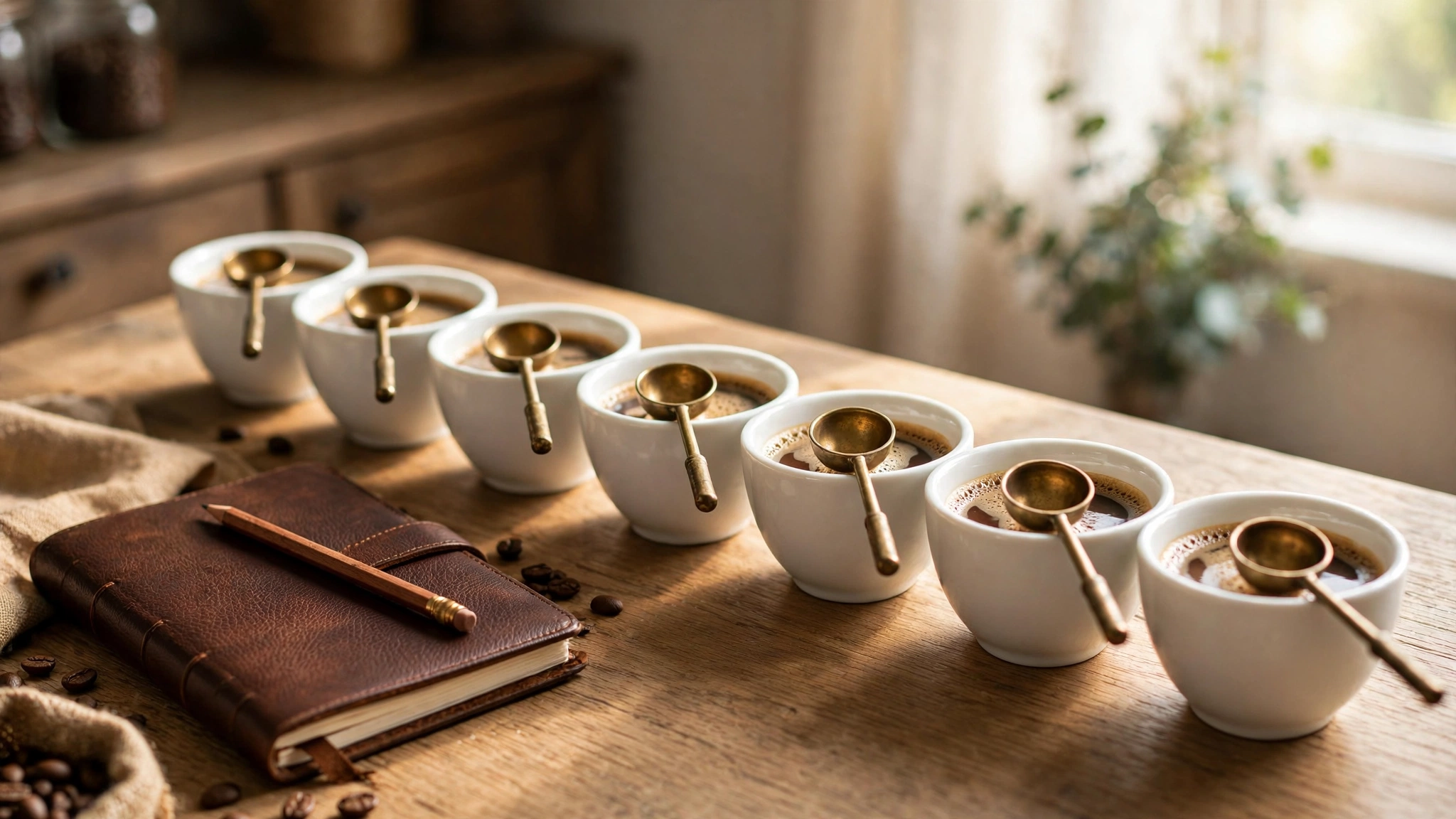
Specialty coffee bags promise notes of jasmine, blood orange or milk chocolate, and newcomers often respond with a reasonable question: where is all that in the cup? Learning to taste coffee is less about having a gifted palate and more about developing vocabulary, attention and a few repeatable habits. This article lays out the components of flavor, how professionals evaluate them, and how to practice at home.
Flavor is mostly smell
The tongue detects a small set of tastes: sweet, sour, salty, bitter and umami. Most of what we call flavor, such as berries, cocoa, caramel or florals, comes from aroma compounds detected in the nose. Coffee contains hundreds of volatile aromatic compounds, and many are created or transformed during roasting. When you drink, aromas travel from the back of the mouth up to the nasal passages, a process called retronasal olfaction. This is why a blocked nose makes coffee taste flat, and why slurping, which aerates the coffee across the palate, is a standard technique in professional tasting.
The core components
Acidity
In coffee vocabulary, "acidity" is usually a positive attribute: the lively, bright, mouth-watering quality that makes coffee seem juicy rather than dull. It is different from sourness as a flaw, though the two can overlap. Coffee contains several organic acids, including citric, malic, phosphoric, tartaric and others, and they contribute different impressions. Citric acid tends to read as lemon or orange, malic as green apple or stone fruit, and phosphoric as a smooth, sparkling kind of brightness often mentioned in connection with Kenyan coffees. Acetic acid, which tastes like vinegar, usually signals fermentation problems. Acid levels also change with roasting and brewing, which is one reason light roasts feel brighter.
Sweetness
Sweetness in coffee is not sugar added to the cup; it is the perception of sugars, caramelized compounds and certain aromas. It is a hallmark of well-grown, well-processed, well-roasted and well-extracted coffee. When a coffee tastes sweet, it usually means that other attributes are in balance, because sweetness softens the perception of acidity and bitterness.
Bitterness
Some bitterness is expected and pleasant, like in dark chocolate. Compounds responsible include chlorogenic acid breakdown products formed during roasting and other roast-derived molecules. Caffeine is bitter but contributes only a modest share of the total bitterness in a cup. Excessive bitterness often reflects a dark roast, over-extraction, or defective beans, so it is a useful diagnostic signal.
Body and mouthfeel
Body describes the weight and texture of coffee on the tongue: watery, tea-like, silky, creamy, syrupy, heavy. It is influenced by dissolved solids, oils and fine particles, which is why a paper-filtered pour-over feels lighter than a French press or an espresso. Processing and origin play a part, too; natural and wet-hulled coffees are often associated with heavier body.
Aftertaste
The finish is what remains after swallowing. A clean, pleasant, lingering sweetness or fruit note is a mark of quality, while a harsh, drying or ashy finish suggests problems. Many experienced tasters pay as much attention to the aftertaste as to the first sip.
Balance
Balance is the relationship among all the above. A coffee with intense acidity and almost no sweetness can feel sharp and unbalanced, while one with modest acidity but lots of sweetness and body can feel round and harmonious. Balance is a judgment, not a measurement, and different drinkers prefer different balances.
Sour versus bitter: the extraction link
Beginners often use sour and acidic interchangeably. A practical distinction: pleasant acidity is bright and fades quickly, leaving sweetness behind. Unpleasant sourness is sharp, sometimes salty or lemon-peel-like, lingers unpleasantly and often comes with a thin body. That signature usually indicates under-extraction, where too little of the coffee's soluble material, including sweetness, has dissolved. Harsh bitterness, dryness and astringency often point to over-extraction. Learning to recognize these two ends helps you adjust brewing variables, as discussed in our brewing guide.
The Coffee Taster's Flavor Wheel
The wheel most commonly used in specialty coffee was developed by the Specialty Coffee Association, with World Coffee Research's sensory lexicon informing the 2016 update. It arranges flavor descriptors in concentric rings, moving from broad categories such as fruity, floral, sweet or nutty near the center to specific descriptors such as blackberry, jasmine, brown sugar or hazelnut at the edge. It is a vocabulary tool: use it by starting at the center and asking which broad family a flavor belongs to, then narrowing down.
It is worth remembering that flavor descriptors are comparisons, not ingredients. A coffee described as having "peach" notes does not contain peach, but may share aromatic compounds with it. Two tasters can describe the same cup differently, and that is normal.
Cupping: the standard tasting method
Cupping is the structured way producers, buyers and roasters evaluate coffee. Under the Specialty Coffee Association's cupping protocol, roasted coffee is ground coarsely and placed in bowls at a ratio of about 8.25 grams per 150 milliliters of water. Hot water near 93°C (200°F) is poured directly over the grounds, and the coffee steeps for about four minutes. The taster then "breaks the crust" with a spoon, smelling the released aroma, skims the surface, and tastes spoonfuls as the coffee cools, noting how flavors evolve. Multiple coffees are cupped side by side, which makes differences much easier to detect than tasting one at a time.
Formal scoring sheets rate attributes such as fragrance and aroma, flavor, aftertaste, acidity, body, balance, uniformity, clean cup and sweetness. A score of 80 or above on the 100-point scale is the common threshold for "specialty" grade coffee.
A practical tasting routine at home
- Pick two or three coffees to compare. Contrast helps. Choose different origins, processing methods or roast levels.
- Brew them the same way. A simple immersion method, or a cupping-style bowl, keeps variables low.
- Smell before you sip. Note the dry grounds, then the wet aroma.
- Slurp, then think in layers. Ask: Is the acidity bright or soft? How sweet is it? How heavy does it feel? What lingers?
- Taste again as it cools. Many flavors, particularly sweetness and fruit, become more apparent as the temperature drops.
- Write short notes. A few words per coffee is enough. Over weeks you will find that your vocabulary becomes more specific and consistent.
Calibrating your palate
Smelling everyday things deliberately, such as fruit, spices, tea, nuts and herbs, builds a library of reference aromas. Tasting with other people and comparing notes helps too, because hearing someone else name a flavor you half noticed can make it click. Expect your descriptors to be personal at first; the goal is not to match a bag's tasting notes, but to notice more accurately and to find the coffees you enjoy.
